
State of the
Sector Report
2025
Scaling Canada’s Impact Investing in Emerging Markets & Developing Economies
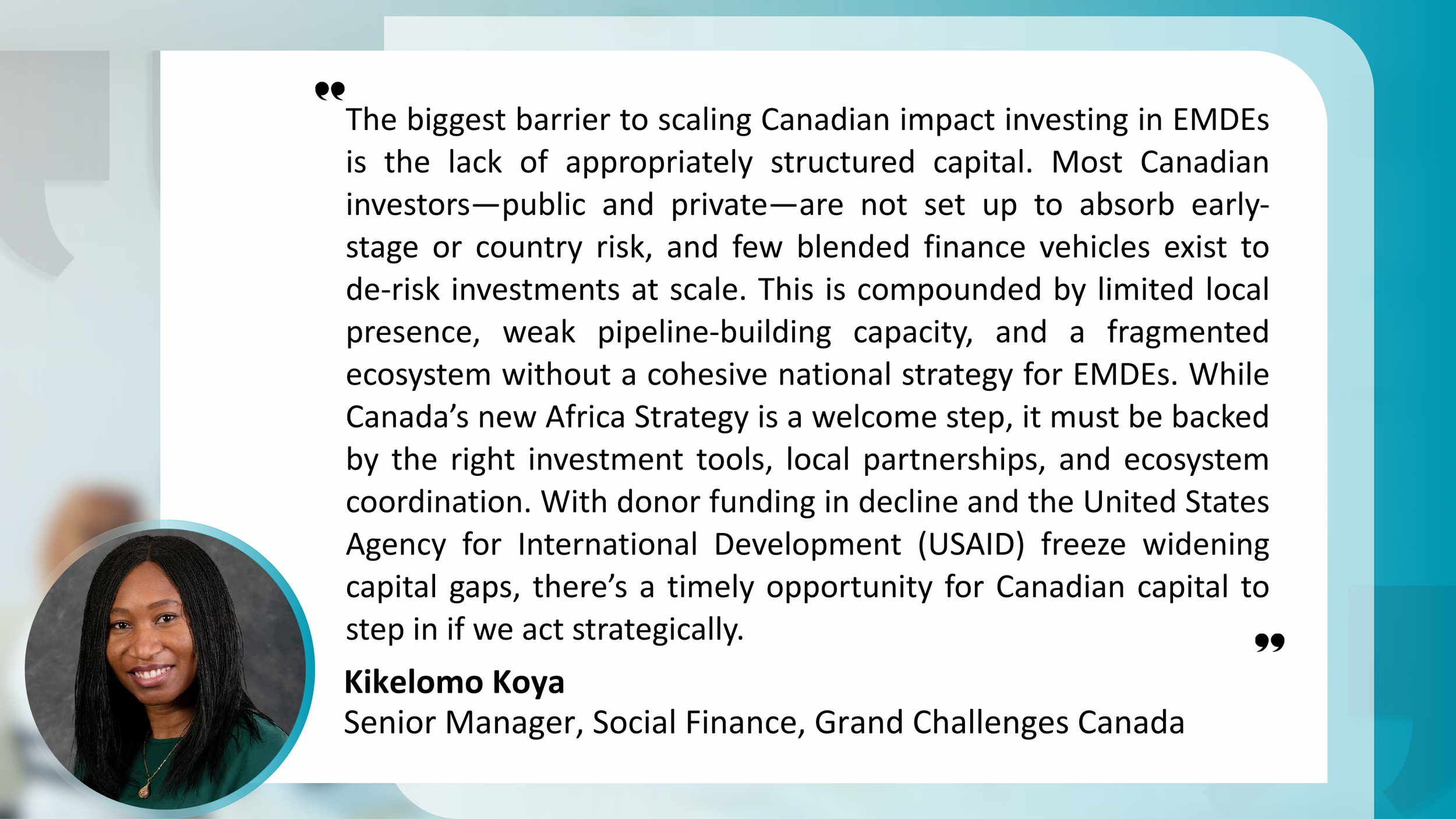
Since 2019, CAFIID’s State of the Sector Reports have tracked the evolution of Canada's impact investing in emerging markets and developing economies (EMDEs). The 2019 report coincided with major milestones, including the creation of FinDev Canada, the launch of the 2X Challenge on gender-lens investing, and the introduction of the International Finance Corporation's Operating Principles for Impact Management. Global Affairs Canada (GAC) also introduced blended-finance mechanisms through the Equality Fund and the International Assistance Innovation Program.
The 2025 State of the Sector Report provides an updated snapshot of Canada's impact investing activity in EMDEs, highlighting key trends, gaps, and growth opportunities. It identifies barriers and practical actions needed to mobilize more private capital, strengthen the ecosystem, and build bridges between Canadian investors and emerging market opportunities.
By reducing barriers and building bridges, the report also informs CAFIID's future programming and partnerships, while urging policymakers, investors, and other ecosystem actors to collaborate through CAFIID to amplify Canada's global impact and accelerate progress toward the Sustainable Development Goals.

Sector Growth
Impact investing in Canada has moved from the margins to the mainstream. With more investors integrating ESG and impact principles into their core mandates, a growing community of Canadian institutions is channelling capital to EMDEs, accelerating climate action, gender equality, and inclusive economic growth.
A doubling of assets under management since 2019
In 2024, members of the Canada Forum for Impact Investment and Development (CAFIID) reported managing an estimated CAD 4.6 billion in assets directed toward impact investments in Emerging Markets and Developing Economies (EMDEs), a 114 percent increase since 2019, representing a 13 percent compound annual growth rate (CAGR). This milestone signals the growing maturity of Canada’s impact-investing ecosystem and its alignment with global efforts to advance the Sustainable Development Goals (SDGs) through the mobilization of private capital.
Latin America remains the region receiving the largest share of investment
In terms of assets under management, Latin America is where there has been the greatest amount of investment representing 46 percent of the total AUM. While an equal number of members invested in Africa, the region accounted for a smaller share at 34 percent of AUM. Asia ranked third. These results mirror the findings of the 2021 report.

-
It was followed by Agriculture and Clean Energy while Consumer Goods also attracted significant investment. This marks a shift from 2021, when Agriculture was the most common sector amongst Canadian impact investors.

-
Women, youth and low-income individuals were the clients of focus most commonly targeted for impact investments.
-
In terms of type of investment, the reporting entities were split almost equally between direct investments and indirect investments through funds. Both of these were in a higher proportion to the levels in 2021.
-
The overall Canadian impact investing ecosystem continues to grow within the broader domestic sustainable finance landscape. As of 2023, responsible investing (RI) represented approximately CAD 4.5 trillion, accounting for roughly 71 percent of total Canadian AUM (RIA, 2024). Within this context, impact investing remained a smaller but rapidly growing niche, with the Canadian market estimated at CAD 14 billion in 2023, up 56 percent from CAD 9 billion in 2015, with a CAGR over that same period of 5.7 percent. Canadian impact investing in EMDEs grew even faster, at a 13 percent CAGR over the same period. However, Canadian impact investing is projected to reach CAD 46 billion by 2030, indicating a significant acceleration with the CAGR at around 19 percent (CIIWG, 2024).
-
The 2024 Global Impact Investing Network (GIIN) report estimates impact AUM at USD 1.571 trillion. This represents a cumulative annual growth rate of 21 percent CAGR since 2019. Most of this AUM remained in developed countries. This growth contrasts with the total AUM cumulative yearly growth rate of 5 percent over the same period, indicating a much faster growth rate for impact investing.
-
Private assets under management have also increased, but at a much lower level. One-third of Canadian AUM in EMDEs is held by FinDev Canada, with another 18 percent held by GAC. While these investments are critical, CAFIID strongly believes that a greater focus is needed on leveraging these scarce public resources to encourage greater Canadian private investment in EMDEs. The balance of this report will make the case for greater private investment in EMDEs and highlight some of the barriers that must be removed and bridges that need to be built to further this ambition.

For Canada, scaling private capital flows to EMDEs is both a moral imperative and a strategic opportunity
Mobilizing even 1 percent of Canadian institutional assets toward well-structured impact investments could unlock over CAD 200 billion in development finance.
-
At the same time, Canadian investors are seeking new frontiers for growth, diversification, and impact. The country’s institutional investors oversee more than CAD 20 trillion in assets under management. Yet only a small fraction of this capital currently reaches EMDEs despite their stronger growth prospects, rapidly expanding middle classes, and urgent demand for climate-resilient infrastructure, food systems, and jobs. Mobilizing even 1 percent of Canadian institutional assets toward well-structured impact investments could unlock over CAD 200 billion in development finance. For Canada, this represents not just an act of solidarity but a pathway to build resilient trade relationships, strengthen global value chains, and position Canadian investors as leaders in the transition from traditional aid to impact investment.
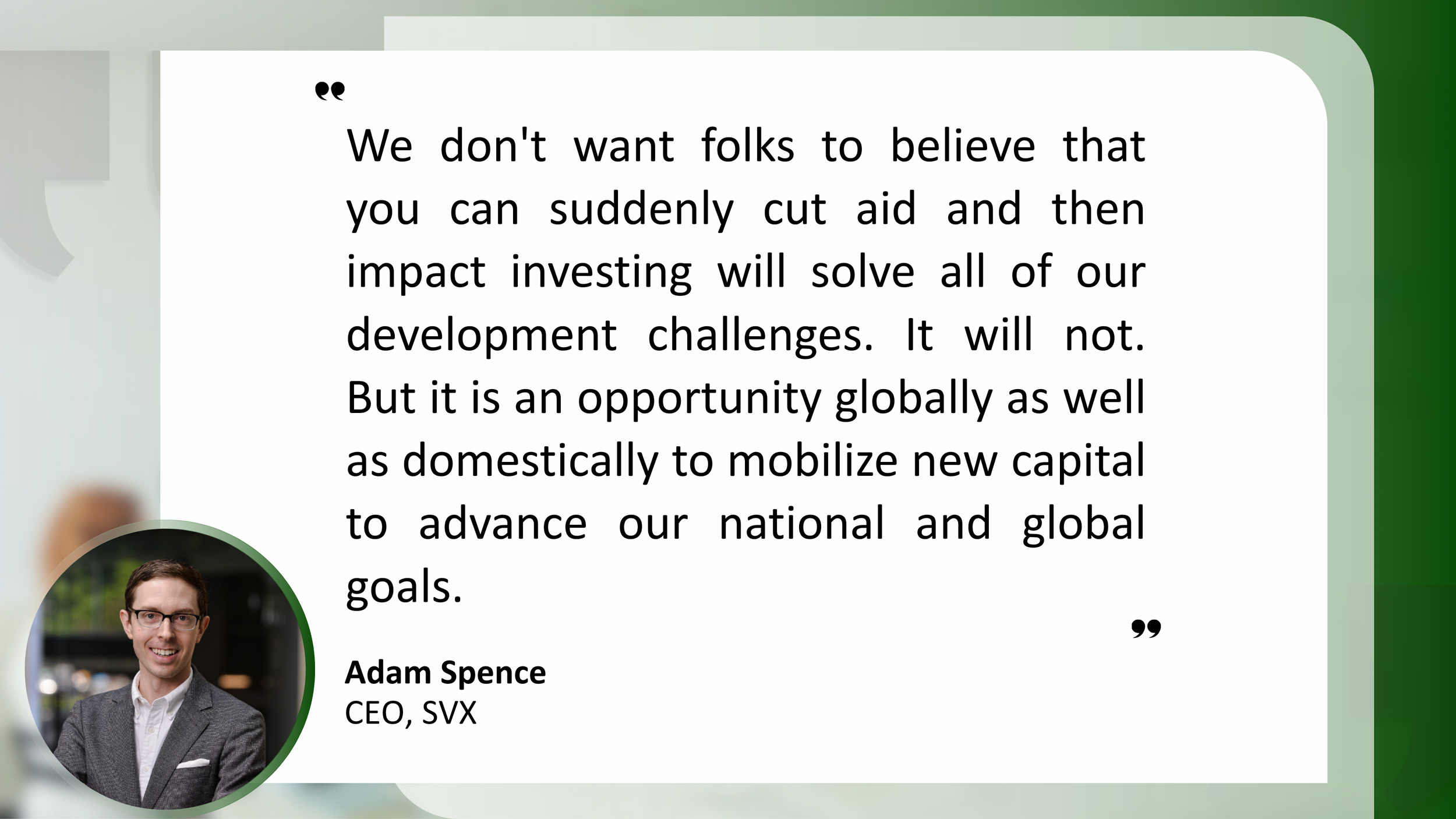
“We don’t want folks to believe that you can suddenly cut aid and then impact investing will solve all of our development challenges. It will not. But it is an opportunity globally as well as domestically to mobilize new capital to advance our national and global goals.”

The Emerging Opportunity of EMDE Investment for Private Capital
Emerging Markets and Developing Economies are now positioned as the primary engines of global growth and investment opportunities.
EMDEs are expected to play a crucial role in shaping the global economy, according to S&P Global, which estimates that they will contribute approximately 65% of global economic growth by 2035.
Nine key EMDEs are projected to rank among the 20 largest economies.
The proportion of emerging economies in which per capita Gross Domestic Product (GDP) is likely to grow faster than the US is on course to surge from 48 percent over the past 5 years to 88 percent in the next five.
Evidence continues to grow that impact investing in EMDEs can offer both competitive financial returns and meaningful social and environmental outcomes.
The Misperception of Risk
Despite growing global enthusiasm for aligning capital with sustainable development outcomes, persistent misperceptions of risk continue to constrain investment flows to EMDEs.
-
For Canadian investors in particular, private capital allocations to EMDEs remain modest, limited by perceptions of high risk, low pipeline visibility, and insufficient local expertise or networks to identify and engage with credible partners and high-potential opportunities. Additionally, elements of Canada's regulatory framework, including fiduciary interpretations and product eligibility rules, further limit institutional investors' ability to pursue well-structured, impact-oriented investments in these markets.
-
Research from Symbiotics and GEMS Risk Database consistently shows that default rates in many EMDE markets are only modestly higher than in developed economies, often by as little as 200–250 basis points. Moreover, emerging market corporate borrowers frequently demonstrate business models and financial strategies that outperform the sovereign risk profiles of their home countries.
-
Innovative instruments such as impact-linked financing, blended finance structures, and risk-sharing facilities are demonstrating that private investors can effectively manage and mitigate both perceived and actual risks. Meanwhile, data providers like Mobilistand Convergence are offering increasingly detailed performance insights, giving investors a clearer view of market realities.
-
The goal is not to dismiss risk, but to right-size it: to ensure that decisions are based on evidence rather than perception. Equipping investors with the tools, information, and confidence to act is essential. Failure to do so risks leaving vast financial value and transformative development impact unrealized in some of the world's most dynamic and rapidly growing markets.
Encouraging Greater Private Sector Engagement
Mobilizing capital from institutional investors is essential to scaling Canada's impact investing ambitions and strengthening its global influence. Together, Canadian pension funds alone control more than CAD 3.29 trillion in assets, an amount that far exceeds the combined resources of ODA, philanthropy, and qualified private investors. Even modest allocations from these institutions could help close the multi-trillion-dollar global financing gap needed to achieve the UN SDGs.
Institutional investors’ long-term horizons make them particularly well-suited to impact investing.
Institutional investors, including pension funds, insurers, sovereign wealth funds, and endowments, each have distinct mandates and risk appetites that shape their investment strategies, which can align with EMDE opportunities.
Capital preservation and liability matching are paramount for pensions and insurers, driving demand for fixed income, infrastructure, and other long-duration assets that deliver steady cash flows.
Despite their vast influence, global institutional investors remain underexposed to EMDEs.
For Canada, aligning fiduciary responsibilities with sustainable development priorities is not merely a moral proposition; it is a strategic one.
Supporting this shift will require Canada to draw on lessons from other jurisdictions, particularly Europe.

The Increase in Public Investment in EMDEs and the Need for Greater Leverage
Since the 2021 State of the Sector Report, the Government of Canada has increasingly embraced innovative finance and impact investing as core instruments of international development policy. What began as a pilot phase through the International Assistance Innovation Program (IAIP) and early catalytic initiatives has evolved into a more strategic and coordinated effort to mobilize private capital at scale.
From Ambition to Action: FinDev Canada’s Role in Advancing Canada’s Development Priorities
With traditional aid under pressure, Development Finance Institutions (DFIs) like FinDev Canada play a critical role in mobilizing private capital for development. As Canada’s bilateral DFI, FinDev Canada complements Canada’s international development efforts by engaging the private sector to deliver measurable impact in emerging markets and developing economies.
The current portfolio exceeds CAD 2 billion and is projected to reach more than CAD 4.8 billion by 2030. To support this growth, FinDev Canada is expanding its footprint outside Canada, with a new office in Singapore (2025) and a planned South Africa hub (2026).
FinDev Canada’s impact performance underscores its catalytic role: 64.5 percent of its portfolio is 2X-aligned, supporting women employment, leadership and women-owned MSMEs; 35 percent of investments qualify as climate finance.
The Government of Canada announced a CAD 700 million concessional capital commitment focussed on private capital mobilisation. The facility’s first investment supports GAIA, a USD 1.48 billion platform for climate adaptation across up to 25 EMDEs, launched with MUFG and the Green Climate Fund.
Through its Technical Assistance Facility, funded by Global Affairs Canada, FinDev Canada helps clients and market actors to deepen impact, strengthen business practices and build inclusive ecosystems. By the end of 2024, it had committed its initial CAD 3.9 million across 31 projects, focusing on gender (68%), climate (32%), business performance (52%) and data (29%).
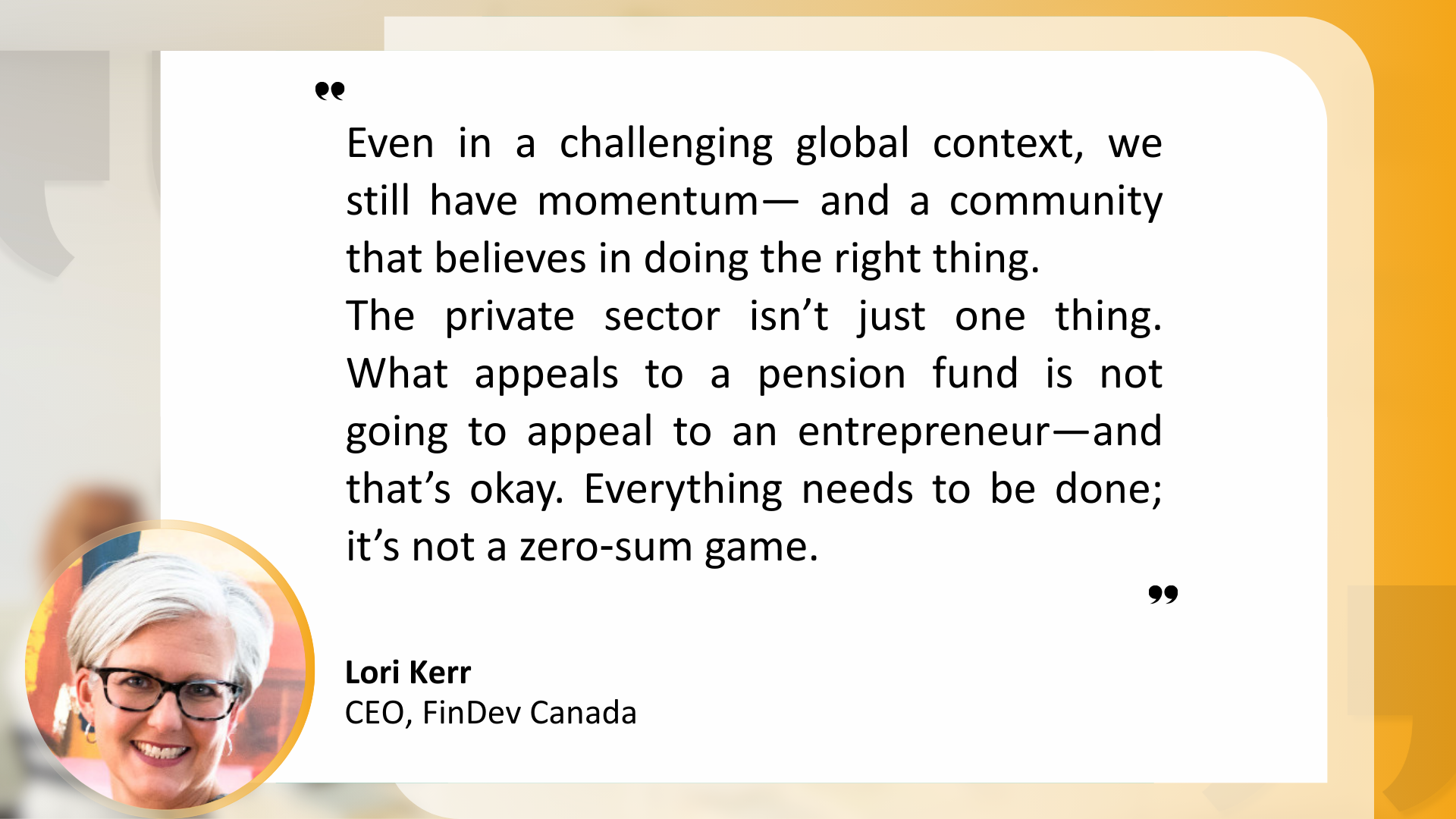
“Even in a challenging global context, we still have momentum— and a community that believes in doing the right thing.
The private sector isn’t just one thing. What appeals to a pension fund is not going to appeal to an entrepreneur—and that’s okay. Everything needs to be done; it’s not a zero‑sum game.”
Global Affairs Canada and the International Assistance Innovation Program
The International Assistance Innovation Program (IAIP) is Global Affairs Canada’s flagship vehicle for testing and scaling new approaches to development finance. It was created to move beyond traditional grants toward a model that mobilizes private capital and local enterprise for sustainable development outcomes.
Between 2021 and 2024, GAC’s total lending through repayable contributions grew from CAD 636 million to CAD 849 million CAD, a 33 percent increase. Within this, Unconditionally Repayable Contributions (URCs) expanded from CAD 624 million to CAD 768 million, while Conditionally Repayable Contributions (CRCs) rose sixfold from CAD 12.5 million to CAD 81 million.
Looking ahead, GAC’s IAIP will continue to scale its use of repayable instruments and blended structures, with emphasis on local capital mobilization and institutional investor engagement.
The 2025 Seville Financing for Development outcome document marks the first consensus between developed and developing countries, recognizing blended finance and private-capital mobilization as core to future development finance. These common principles aim to define clear standards for transparency, additionality, and impact measurement in blended finance, cementing Canada’s commitment to making private capital mobilization a central pillar of its sustainable development strategy.
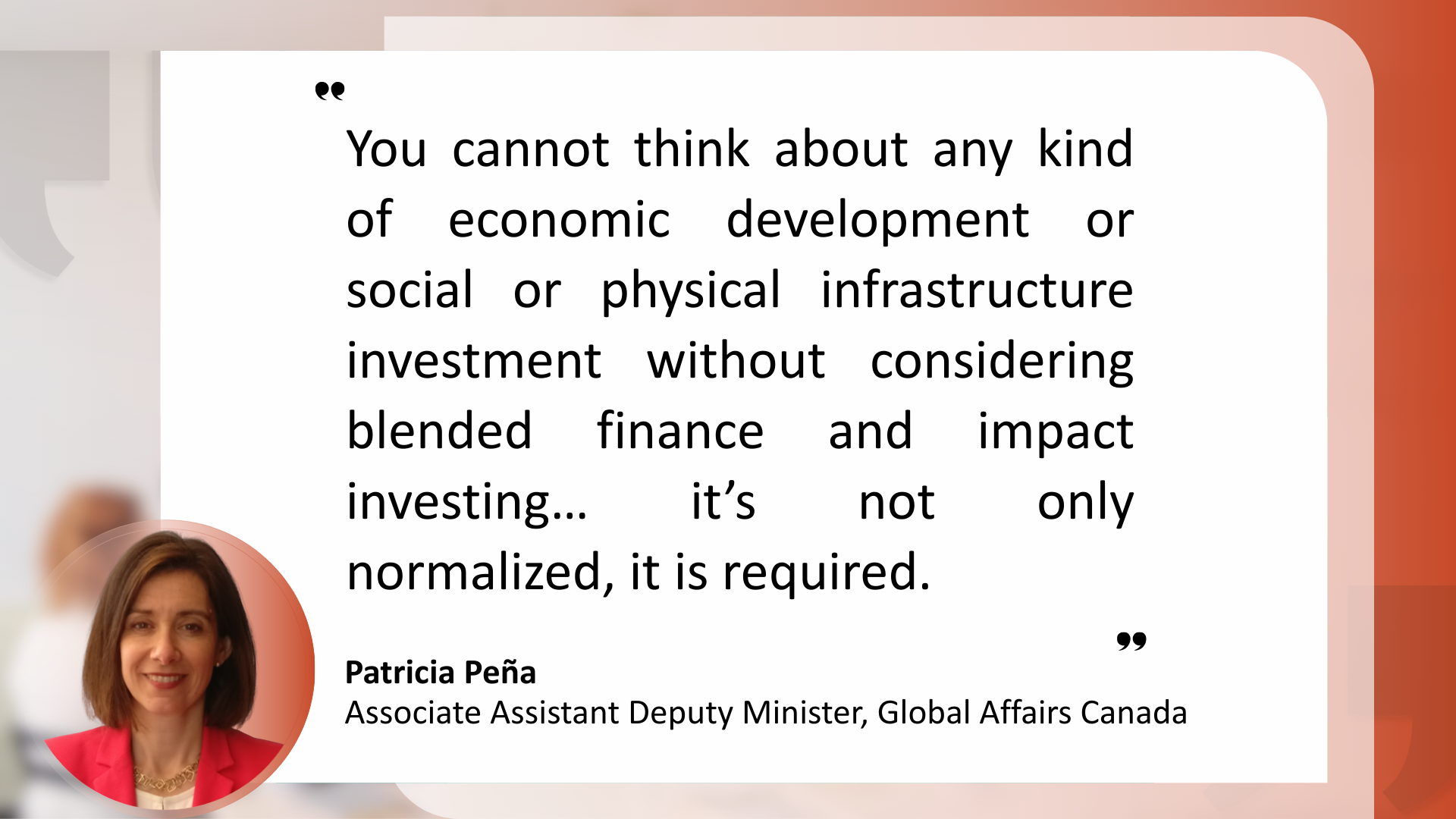
“You cannot think about any kind of economic development or social or physical infrastructure investment without considering blended finance and impact investing… it’s not only normalized, it is required.”

Key Thematic Trends
The research reveals an ecosystem entering a new phase of maturity: climate and gender lenses are deeply embedded; local domiciliation and pipeline development are priorities; and awareness of impact investing has evolved from a niche curiosity to an institutional practice.
Climate Finance
Climate and nature considerations have become central investment drivers. Through green bonds, sovereign loans, and debt-for-nature swaps, Canadian investors are advancing mitigation and adaptation goals while generating social and economic co-benefits.
“Climate has been the biggest trend in impact investing. It makes sense because there’s a clear value proposition and it’s easier to work out the risk return ratio.”


Gender Equality
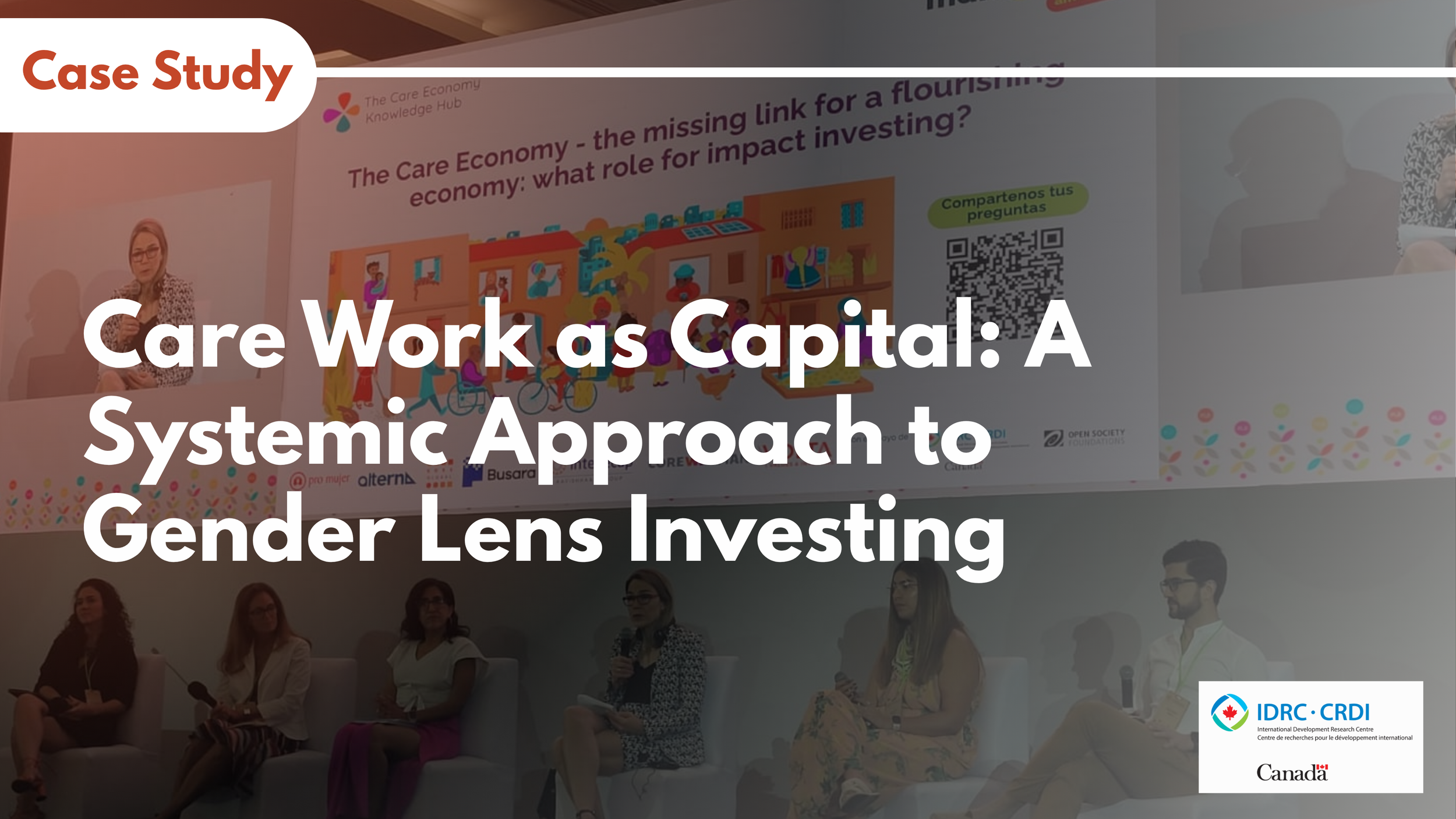
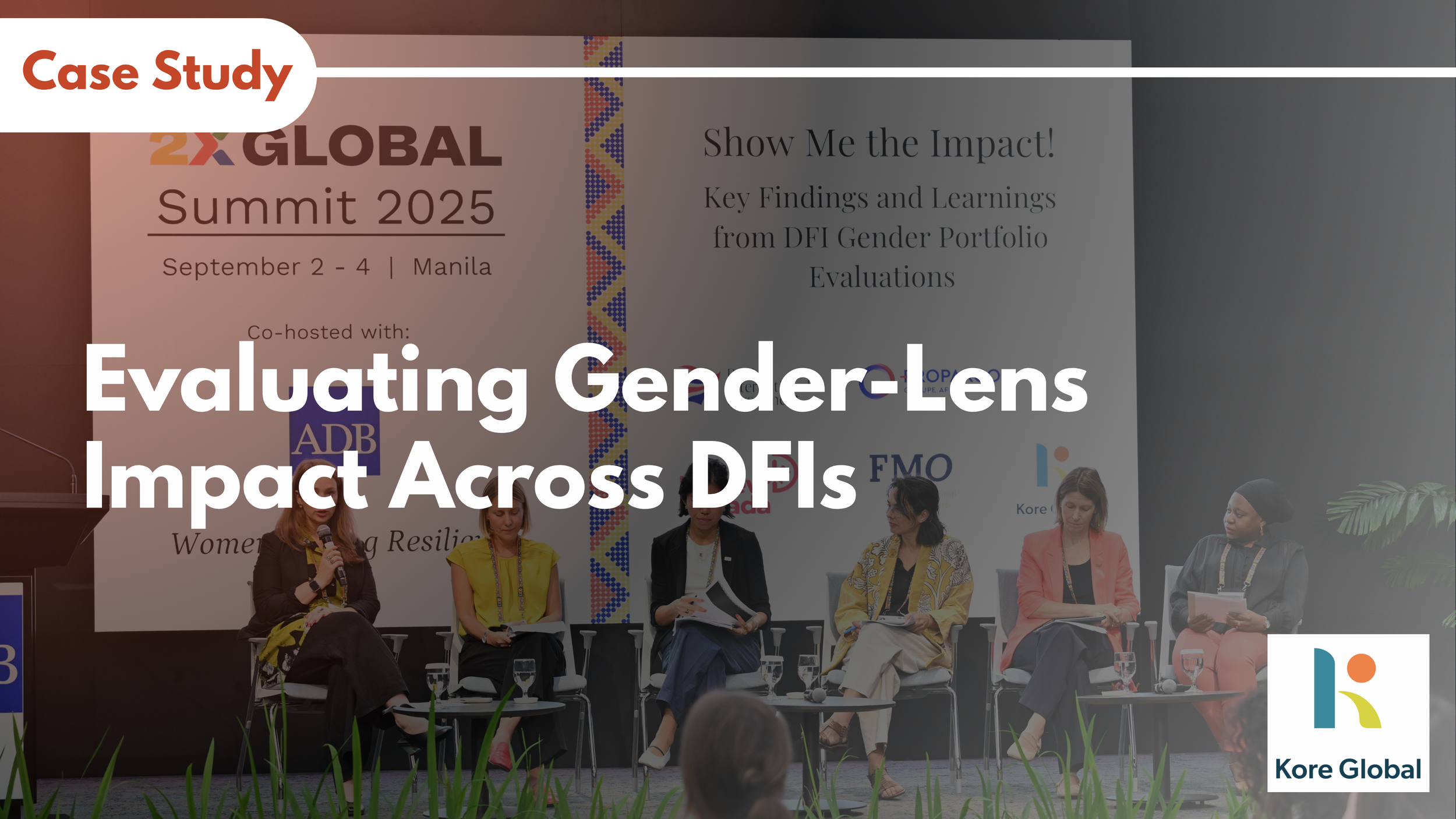
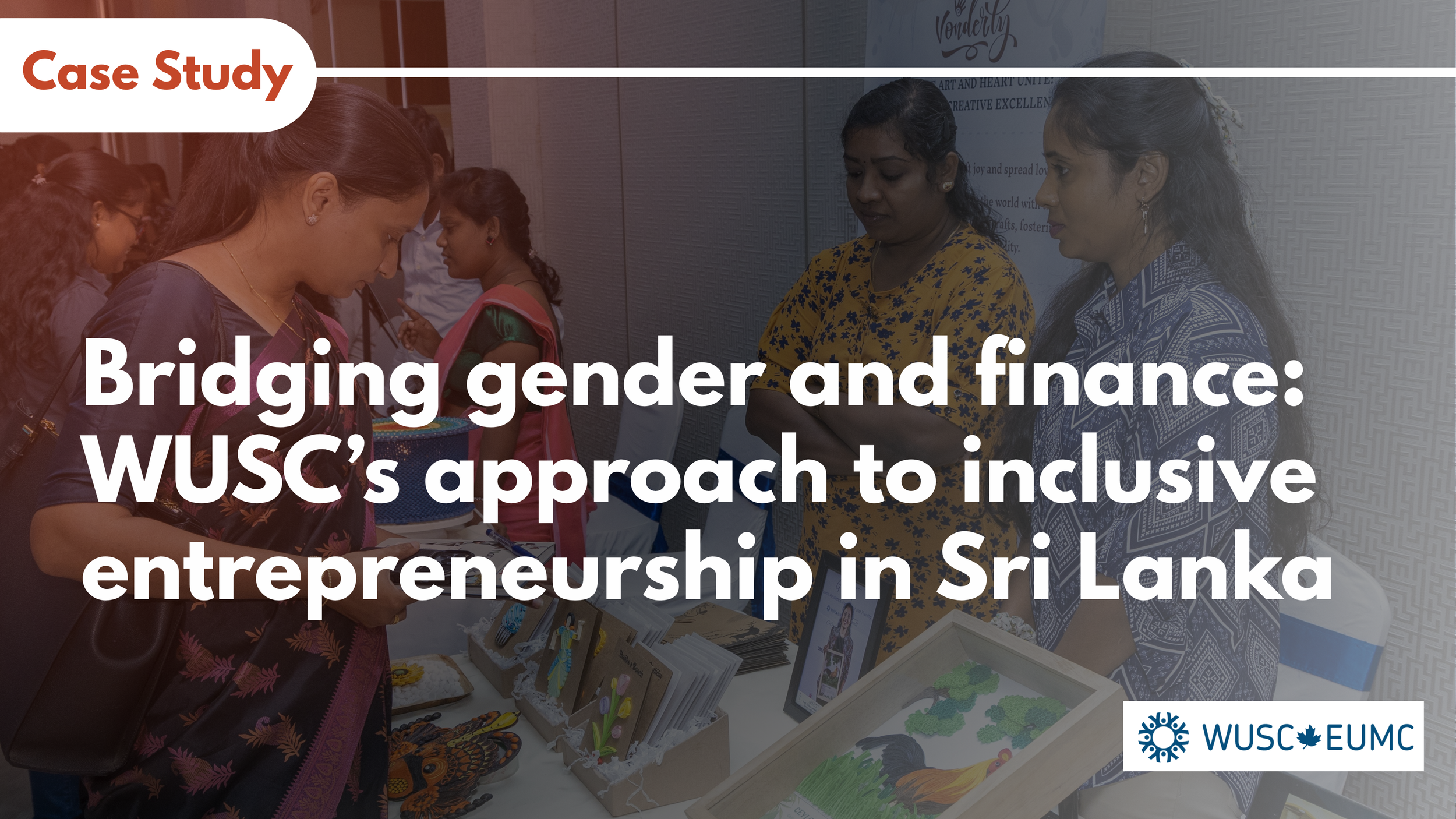
Two-thirds of members apply gender-lens criteria, making gender intentionality a hallmark of Canadian leadership and a driver of inclusive business performance.

Impact Measurement and Management
Impact Measurement and Management (IMM) has evolved from compliance to strategy, with Canadian funds aligning with global standards, such as the SDG Impact Standards and the Operating Principles for Impact Management.
-
Finance has unparalleled potential to foster social and environmental change. As a fully impact-driven asset manager, Fondaction Asset Management (FAM) aims to deliver competitive returns while creating meaningful outcomes. Experience shows that many organizations struggle to translate their sustainability goals into real-world impact as overly granular metrics, siloed ESG teams, and compliance-focused approaches can limit meaningful change.
FAM tackles this by embedding impact from the inside out. In 2023, the firm launched an in-house ESG and Impact Program, ensuring all employees, including leadership, integrate sustainability into daily decisions.
In early 2025, FAM achieved a major milestone: every employee, including the executive team, completed the IMM for the SDGs online course, delivered by Duke University.
Based on the UNDP SDG Impact Standards, which extend beyond reporting, the standards offer practical tools to align values with actions and contribute to global frameworks like the ISO/UNDP Guidelines for the SDGs. This firm-wide commitment to “impact fluency” reflects a more profound cultural shift, embedding sustainability and SDG alignment into daily decision-making, governance, and operations.
Embedding impact across strategy and operations enables responsible innovation and meaningful outcomes. While acknowledging that full implementation will take time and continual improvement, FAM remains confident they are heading in the right direction.
By aligning capital with intentional impact, FAM demonstrates how finance can be a force for good, showing that progress in sustainable investing depends on shared commitment and leadership at every level.
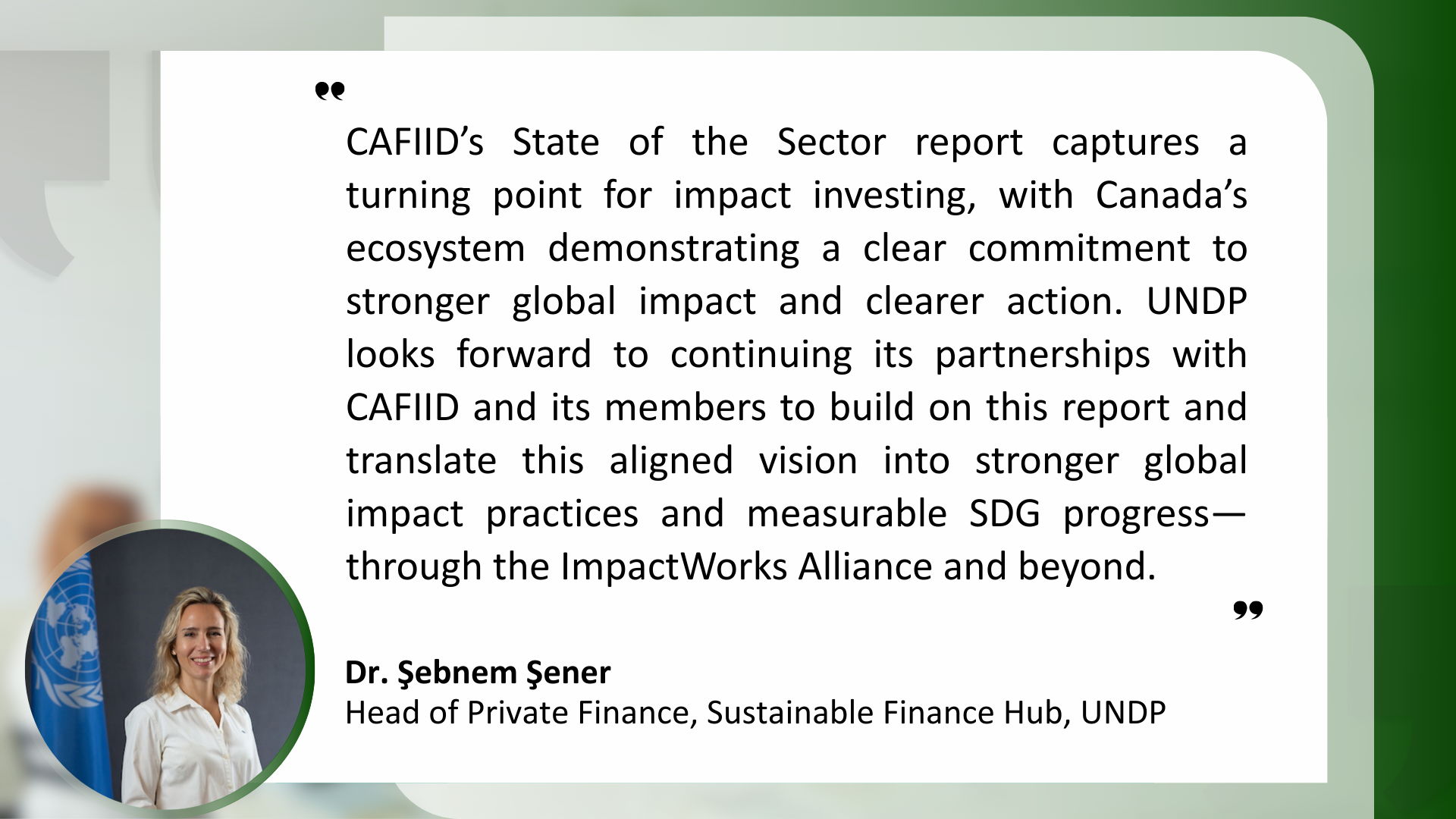
“CAFIID’s State of the Sector report captures a turning point for impact investing, with Canada’s ecosystem demonstrating a clear commitment to stronger global impact and clearer action. UNDP looks forward to continuing its partnerships with CAFIID and its members to build on this report and translate this aligned vision into stronger global impact practices and measurable SDG progress—through the ImpactWorks Alliance and beyond.”

Artificial Intelligence
Early pilots in AI-driven impact analytics and portfolio management reveal potential efficiency gains—but also underscore the need for robust ethical and governance frameworks.
-
Rally Assets, a Canadian impact investing firm and CAFIID member, is exploring how artificial intelligence (AI) can enhance both operational efficiency and impact measurement to further its mission of shifting capital systems to advance sustainability, equity and justice for all. CEO Upkar Arora describes the firm’s approach as guided by values and responsible innovation. Rally Assets has implemented an AI assessment framework evaluating accuracy, bias, transparency, and alignment with impact principles, while emphasizing human oversight and ethical guardrails. Early pilots, such as AI meeting notetakers and staff training on ChatGPT, have improved efficiency and built internal capacity, sparking important conversations about consent, data ethics, and practical use cases.
Rally Assets is cautiously expanding AI into impact measurement, portfolio optimization, and
market intelligence, with a commitment to continuous learning. Rally applies a risk-based approach to AI, requiring explainability and human oversight for any use influencing material decisions. The firm sees governance, ethics, and collaboration as essential to scaling AI responsibly, with adoption critical for competitiveness—especially for smaller organizations. By embedding AI thoughtfully and fostering cross-sector collaboration, Rally Assets believes mid-sized firms can integrate innovation while strengthening accountability, due diligence, and long-term impact, offering a framework for responsible AI adoption in sustainable finance.
Local Domiciliation
Establishing and managing funds within the countries or regions where investments occur builds trust, accountability, and long-term market infrastructure. It helps nurture local fund-management talent, strengthens oversight bodies, and creates clearer channels for domestic pension and insurance capital to participate in impact finance. Mobilizing global capital is not enough unless local ecosystems can retain and recirculate it, complementing it with local resources.
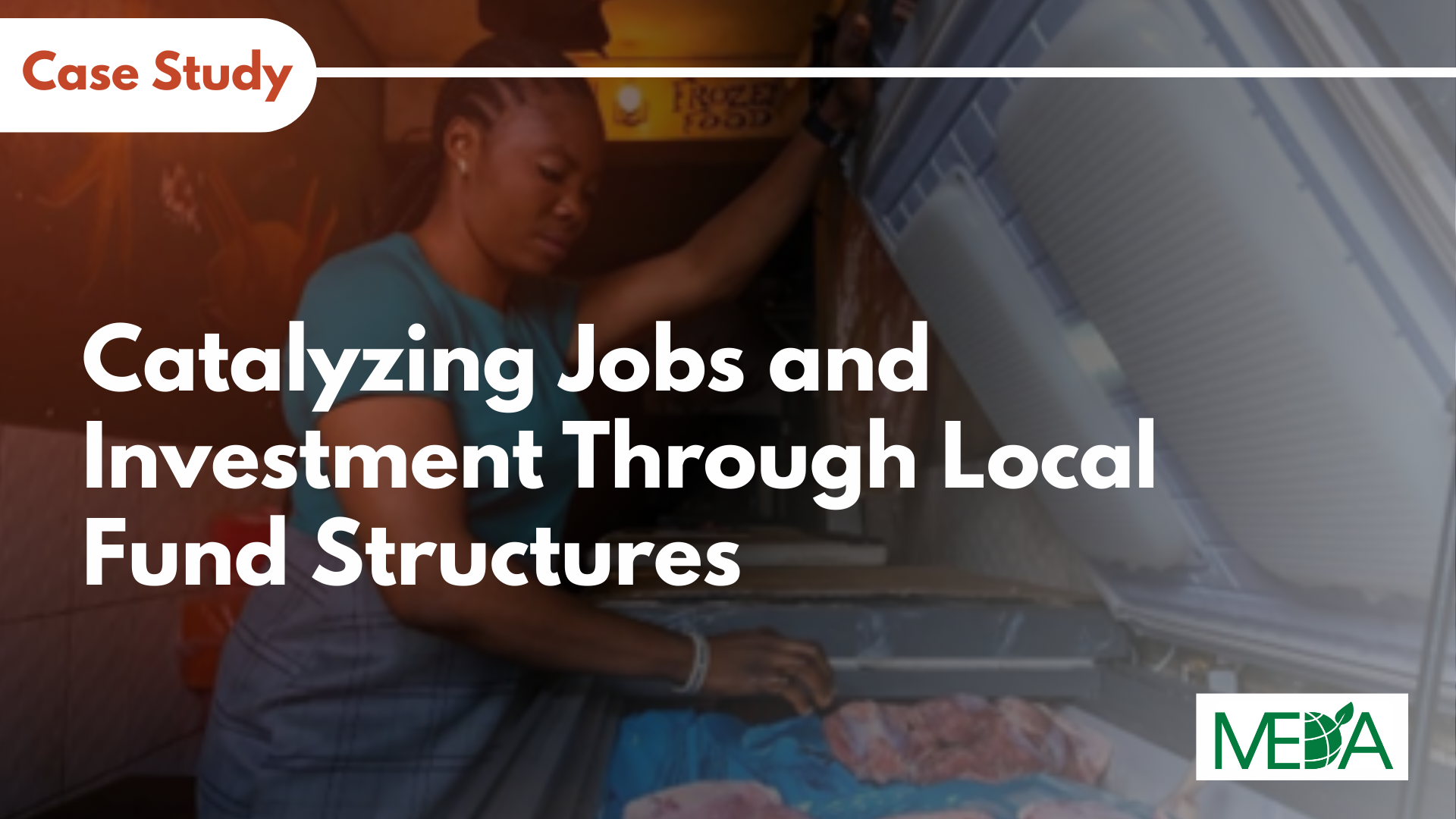
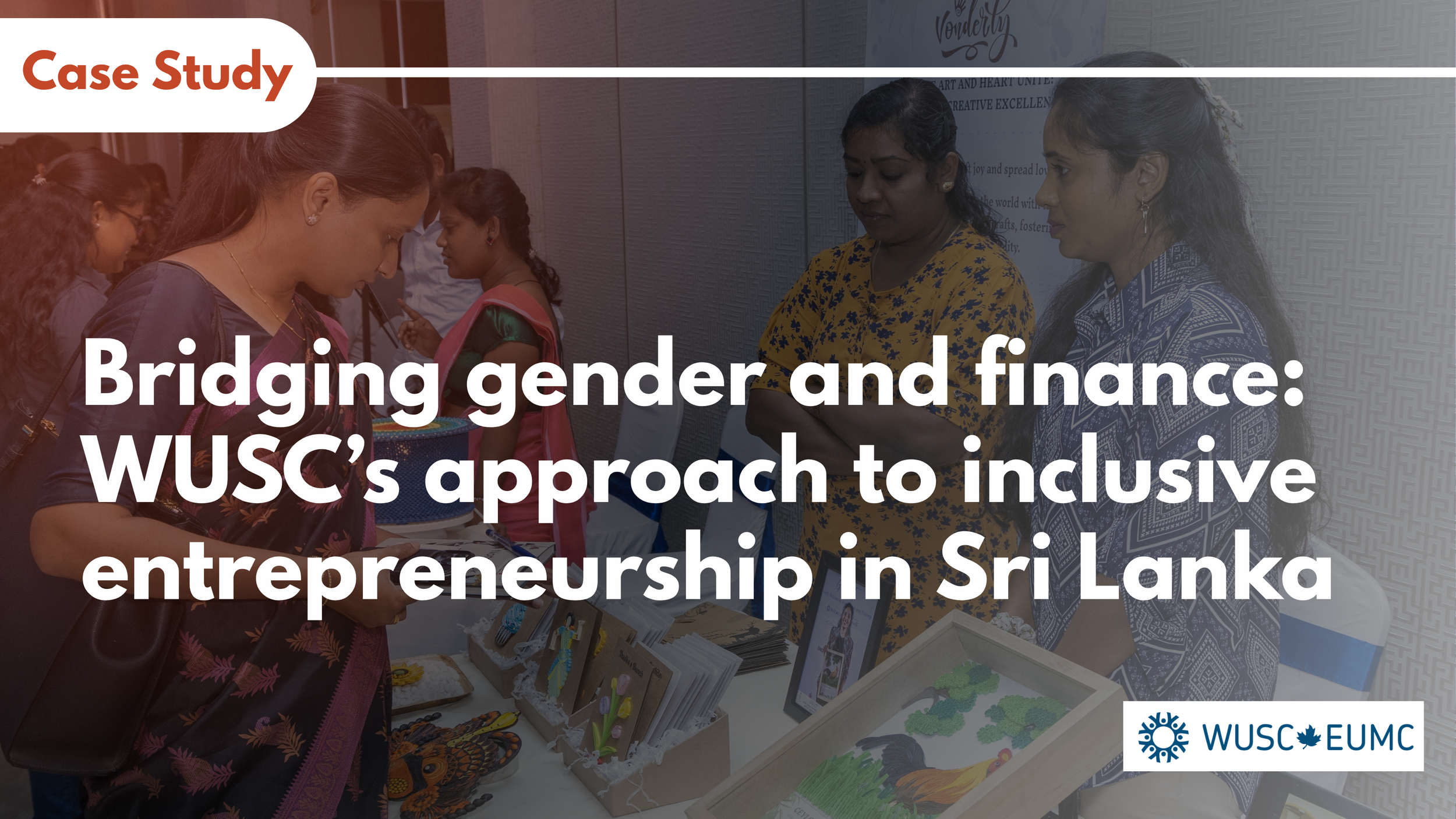
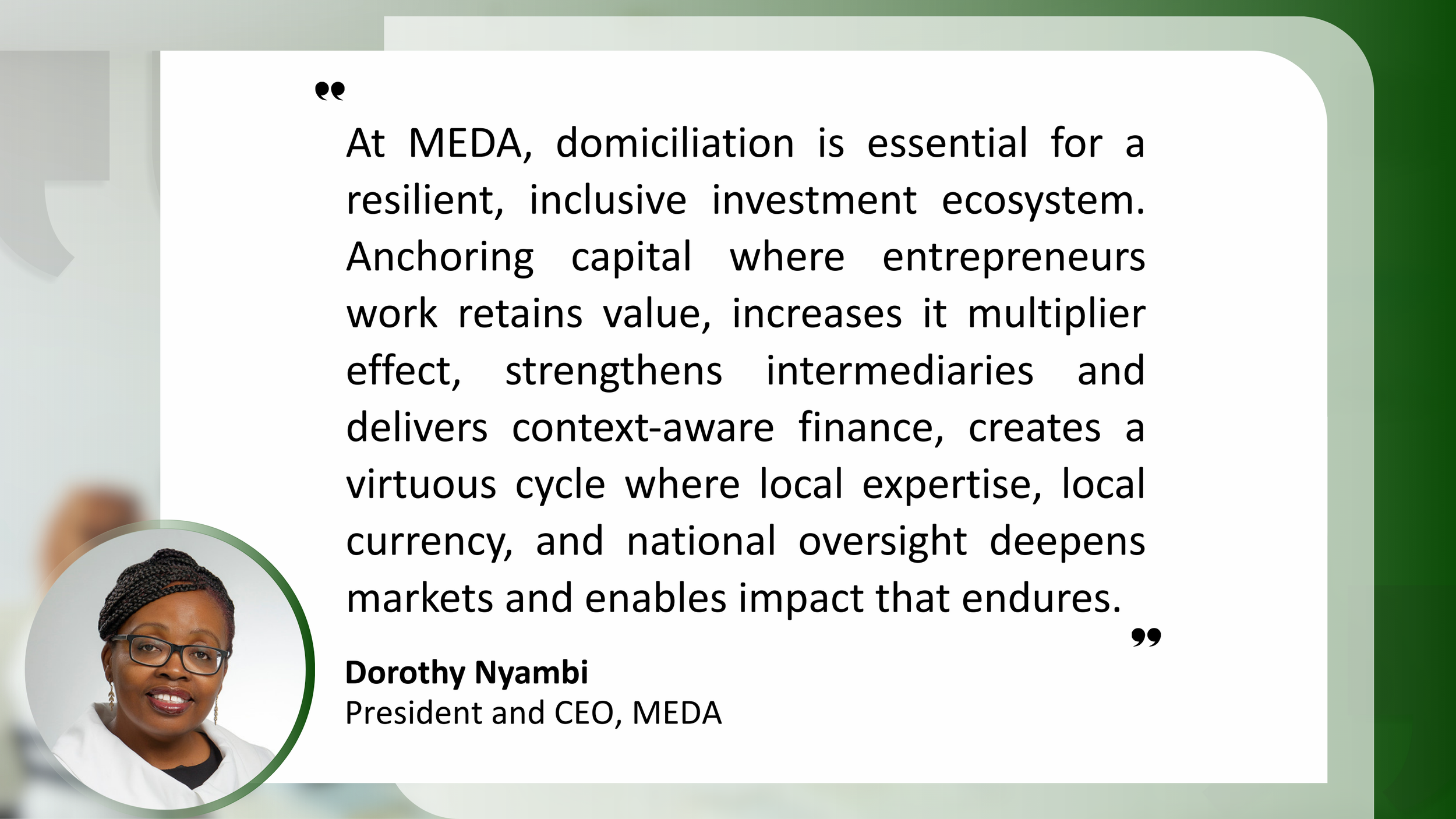
“At MEDA, domiciliation is essential for a resilient, inclusive investment ecosystem. Anchoring capital where entrepreneurs work retains value, increases it multiplier effect, strengthens intermediaries and delivers context-aware finance, creates a virtuous cycle where local expertise, local currency, and national oversight deepens markets and enables impact that endures”
Growing Awareness and Normalization of Impact Investing
Nearly every conversation reflected a cultural shift: impact investing is no longer viewed as experimental or peripheral. Participants called for more storytelling and evidence-sharing to translate this momentum into mainstream capital mobilization, especially among institutional investors still constrained by conservative fiduciary interpretations and limited EMDE exposure.
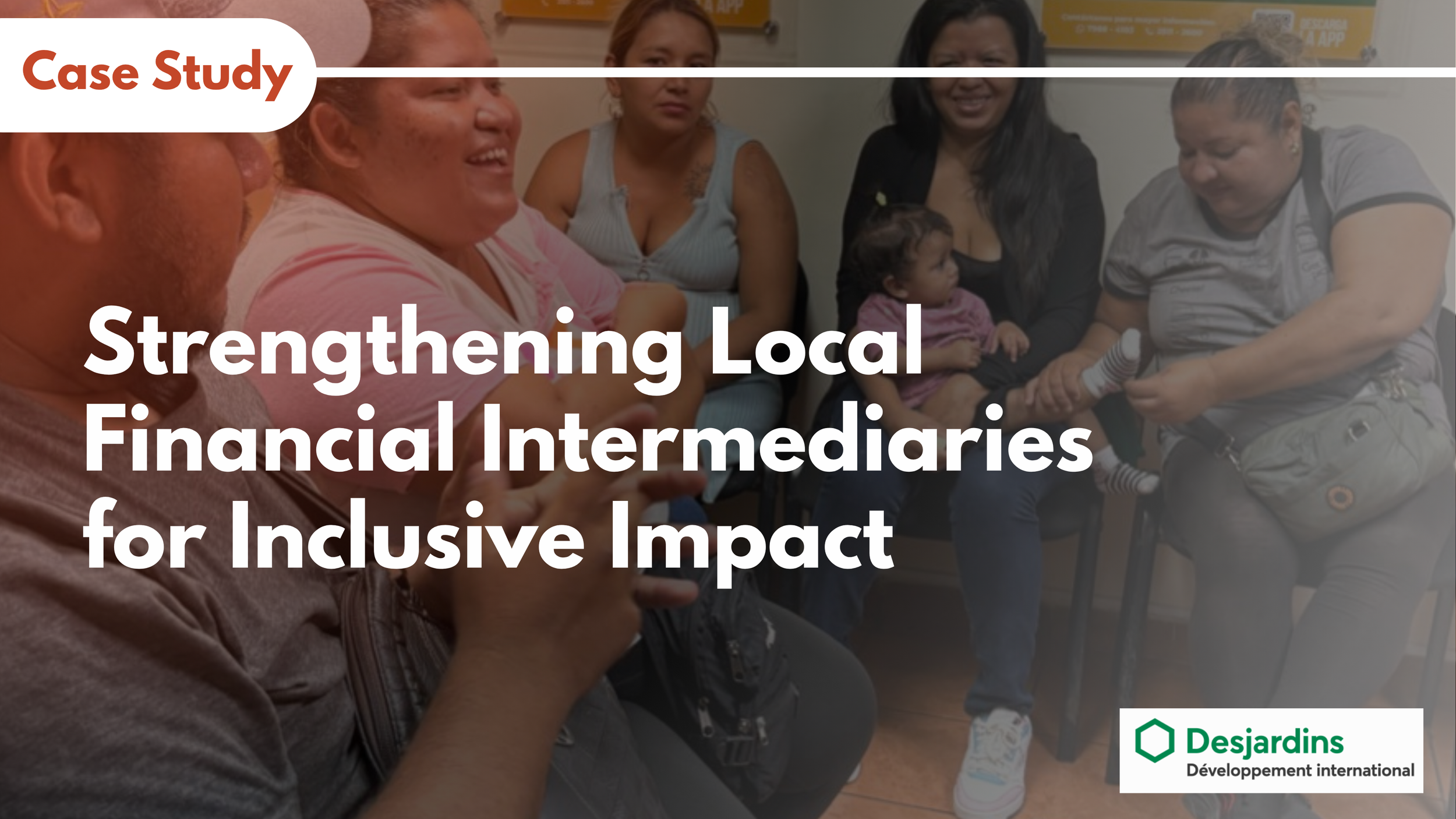
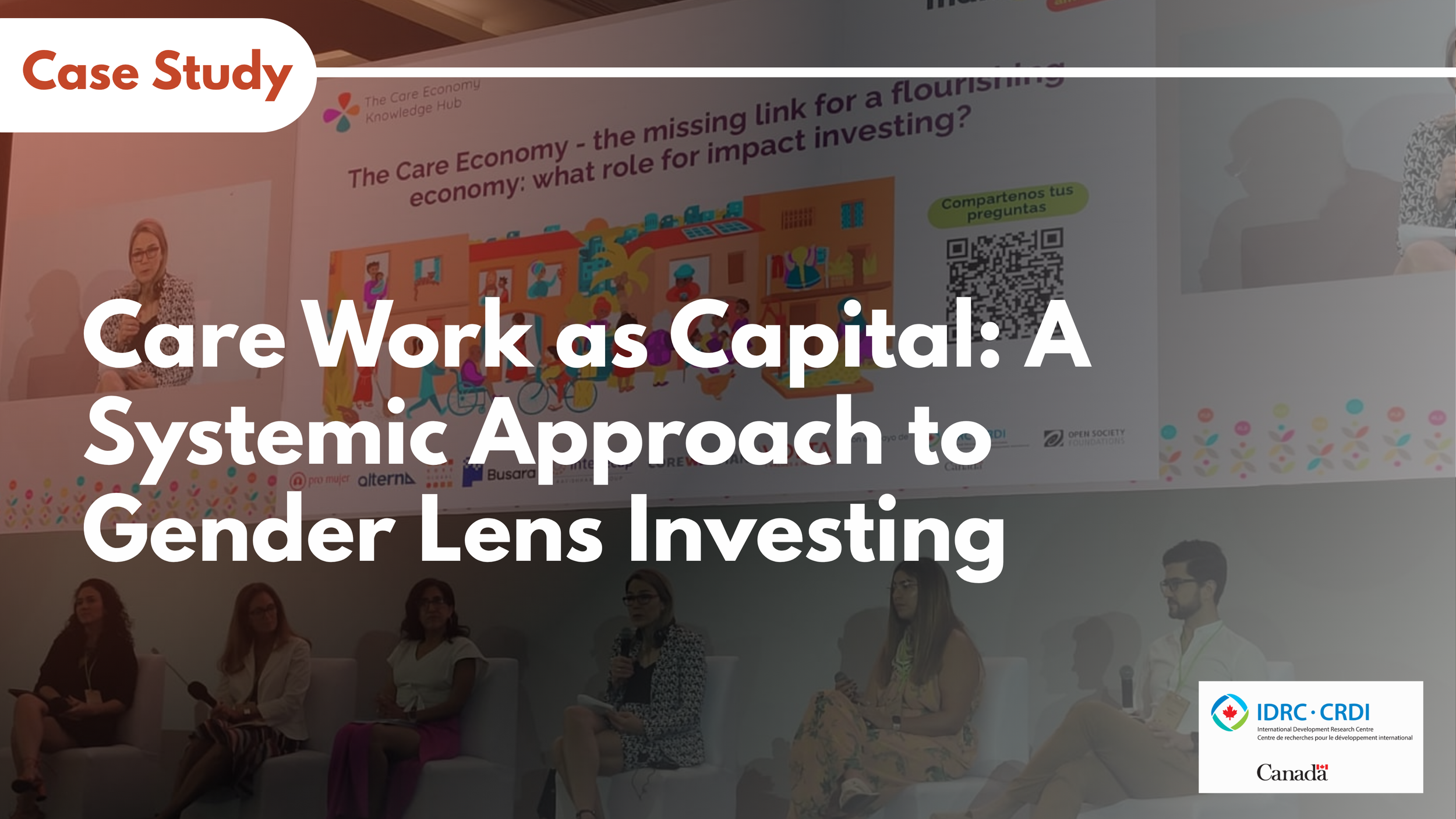
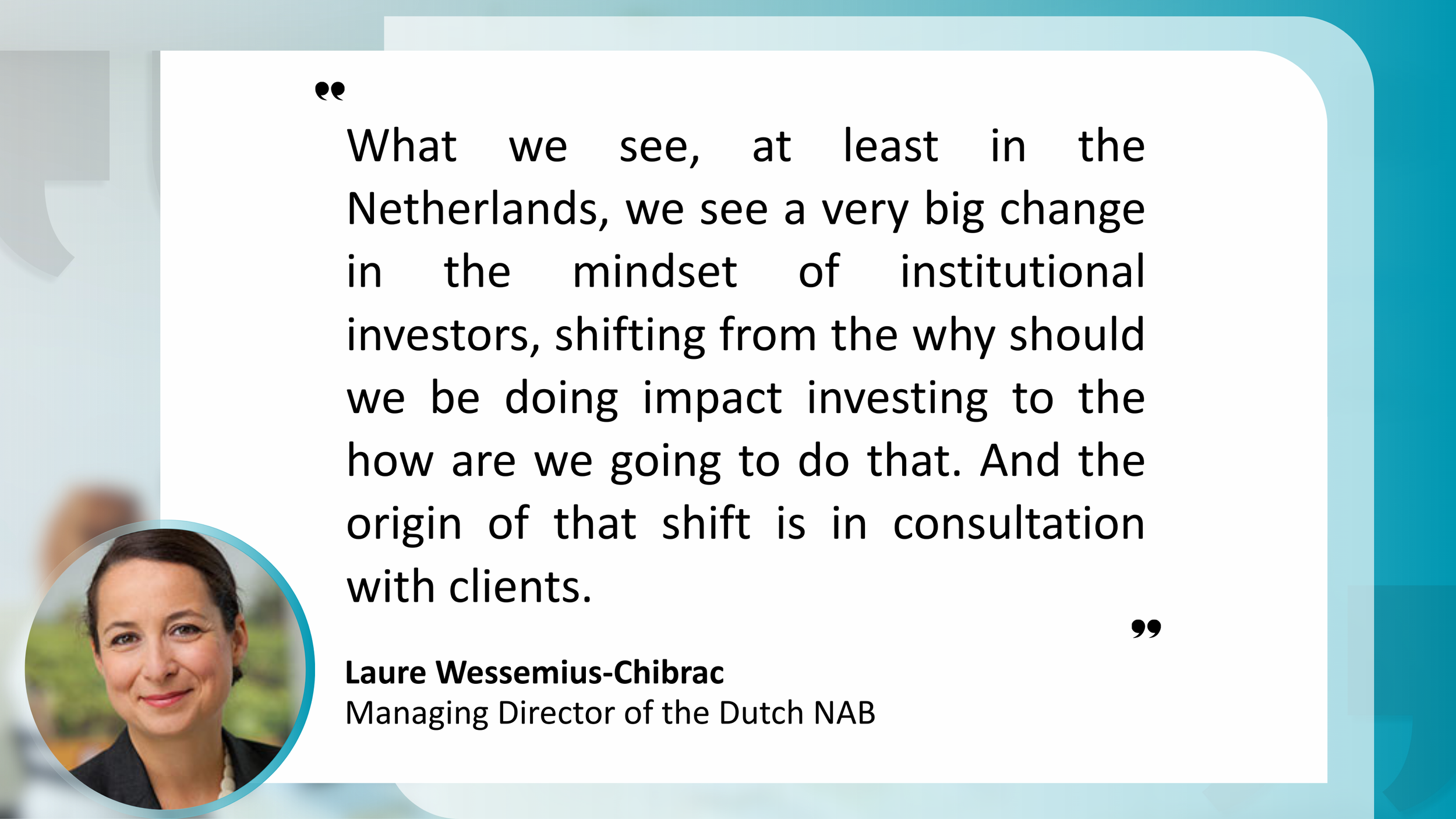
“..what we see, at least in the Netherlands, we see a very big change in the mindset of institutional investors, shifting from the why should we be doing impact investing to the how are we going to do that. And the origin of that shift is in consultation with clients”
Engaging Emerging Leaders in Impact Investing
CAFIID has been strengthening efforts to engage the next generation of impact investors through student memberships, professional development and closer ties with academia. Canadian youth are increasingly seeing capital not just as a tool for returns, but as a lever to drive social and environmental change.

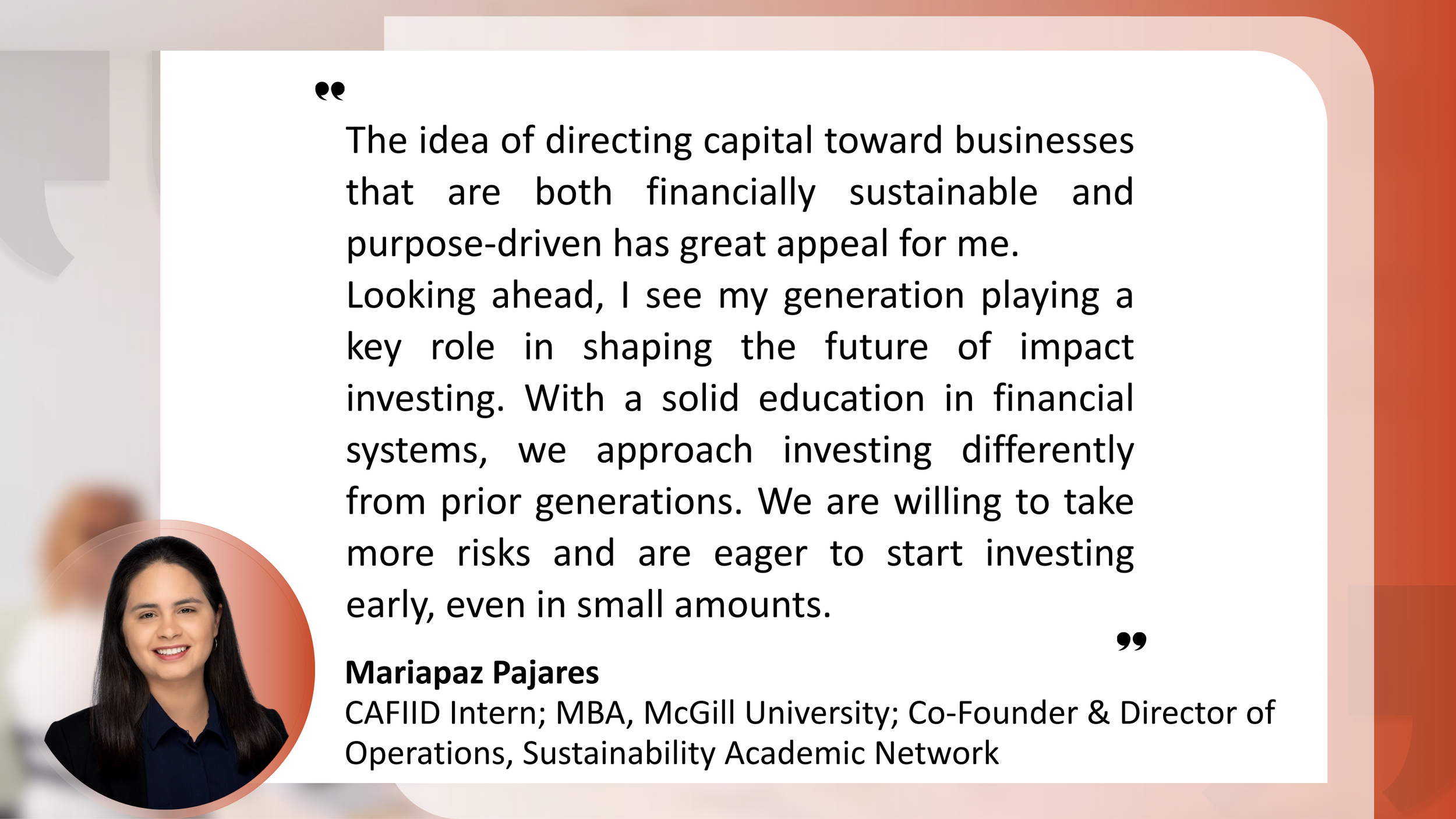
“The idea of directing capital toward businesses that are both financially sustainable and purpose-driven has great appeal for me.
Looking ahead, I see my generation playing a key role in shaping the future of impact investing. With a solid education in financial systems, we approach investing differently from prior generations. We are willing to take more risks and are eager to start investing early, even in small amounts.”
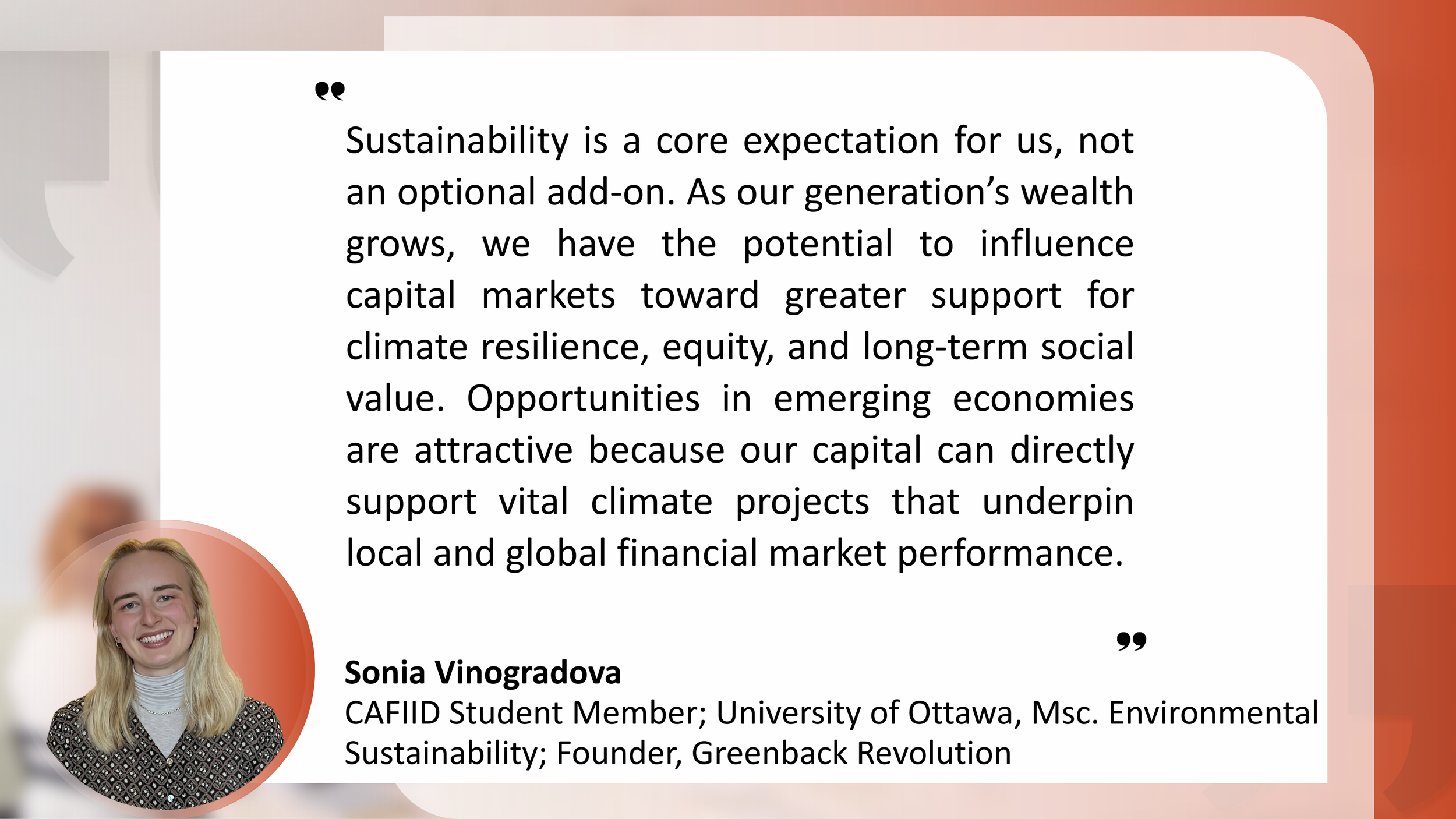
“Sustainability is a core expectation for us, not an optional add-on. As our generation’s wealth grows, we have the potential to influence capital markets toward greater support for climate resilience, equity, and long-term social value. Opportunities in emerging economies are attractive because our capital can directly support vital climate projects that underpin local and global financial market performance.”

Breaking Down Barriers to Scaling Canadian Impact Investing in EMDEs
Despite strong foundations, three interlocking barriers continue to limit private-sector participation at scale

-
Canada's regulatory framework does not explicitly prohibit institutional investors from allocating equity or debt to EMDEs. Yet, a dense web of prudential oversight, fiduciary interpretations, and securities compliance acts as a powerful deterrent.
In contrast, the European Union’s European Long-Term Investment Funds regulation (ELTIF) and Japan’s “New Form of Capitalism” explicitly integrate long-term, impact-oriented investment as a national or regional competitiveness strategy.
A central barrier lies in the interpretation of fiduciary duty. CAFIID supports the CIIWG recommendation for a "modernized fiduciary duty"—one that empowers institutional investors to consider long-term systemic risks and social outcomes as part of prudent decision-making, rather than treating them as secondary or non-financial concerns.
The threat of greenwashing penalties, combined with fiduciary ambiguity, makes institutional investors especially cautious when exploring less standardized EMDE opportunities.
Canadian laws permit consideration of impact but lack clear guidance, resulting in conservative interpretations that discourage EMDE allocations.

-
Structural barriers to scaling impact investing in EMDEs are well-documented: the lack of investable deal-flow, the small size and bespoke nature of transactions, and high perceived country- and deal-level risks.
Aggregation of smaller deals into standardized, larger vehicles —a model often adopted by DFIs in other markets —remains one of the most promising strategies to “right-size” risk for large capital pools.
The answer many analysts suggest is a model of aggregated structures of pooling smaller deals into larger vehicles, standardizing documentation, and deploying credit enhancements or first-loss capital to make the risk profile acceptable for institutional investors.
Deal fragmentation, small transaction sizes, and limited data transparency make it challenging for institutional investors to match their size and liquidity needs.

-
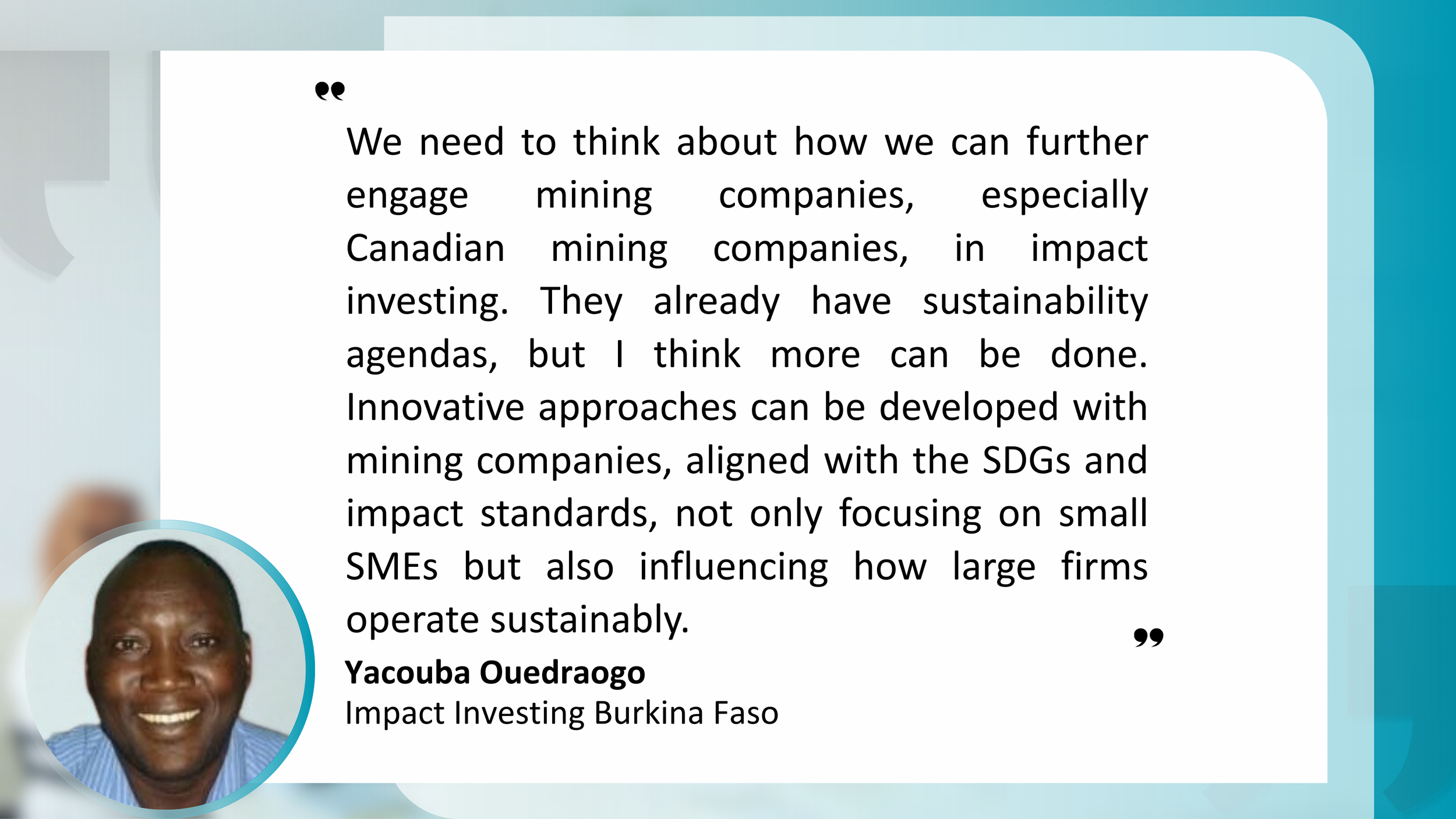
Canada's financial community has deep expertise in financing mining, energy, and infrastructure projects across EMDEs, but far less exposure to inclusive finance, agrifood systems, and gender-smart SMEs, which form the backbone of local economies in EMDEs.
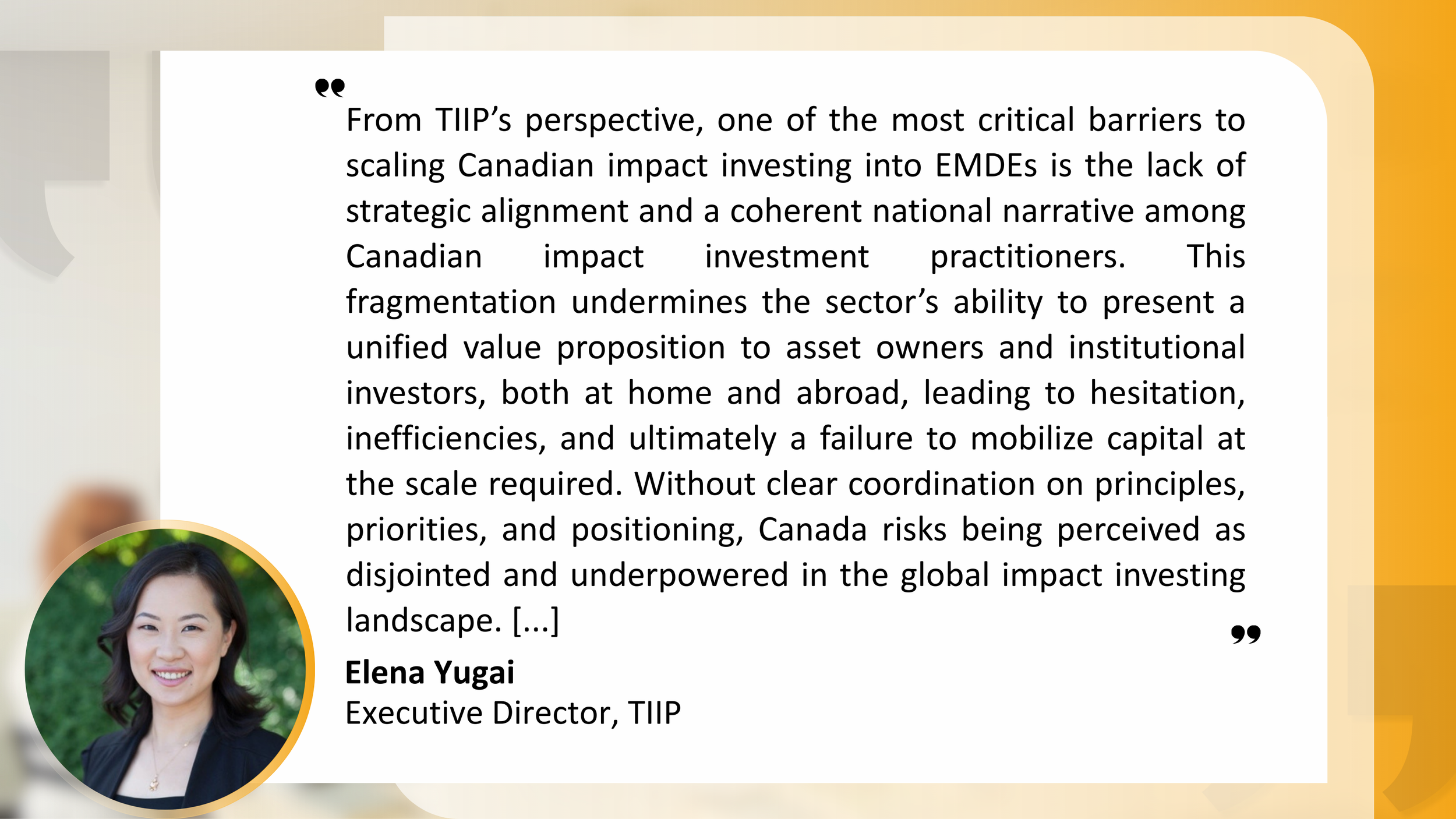
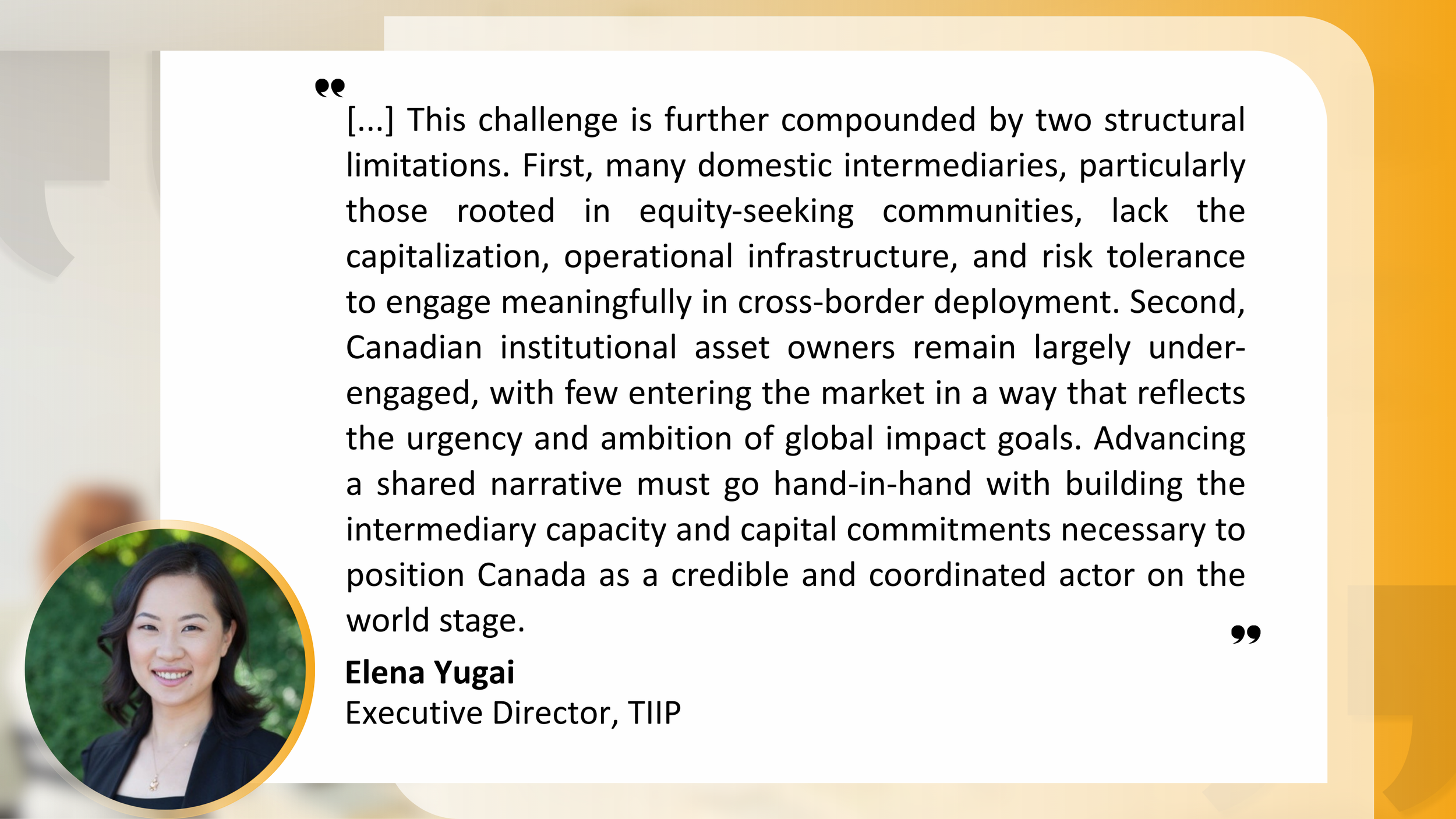
Just as importantly, Canada needs a unified narrative that repositions EMDEs as opportunity-rich ecosystems for climate, gender, and local enterprise innovation, rather than as peripheral or high-risk zones. By shifting mindsets, standardizing structures, and showcasing investable success stories, Canada can begin to move beyond the "mining mindset" and toward a new era of development-driven investment leadership.
Outdated risk perceptions and limited market intelligence suppress appetite for EMDE exposure despite competitive returns.

Building the Bridges to Strengthen Canadian Coordination and Global Leadership
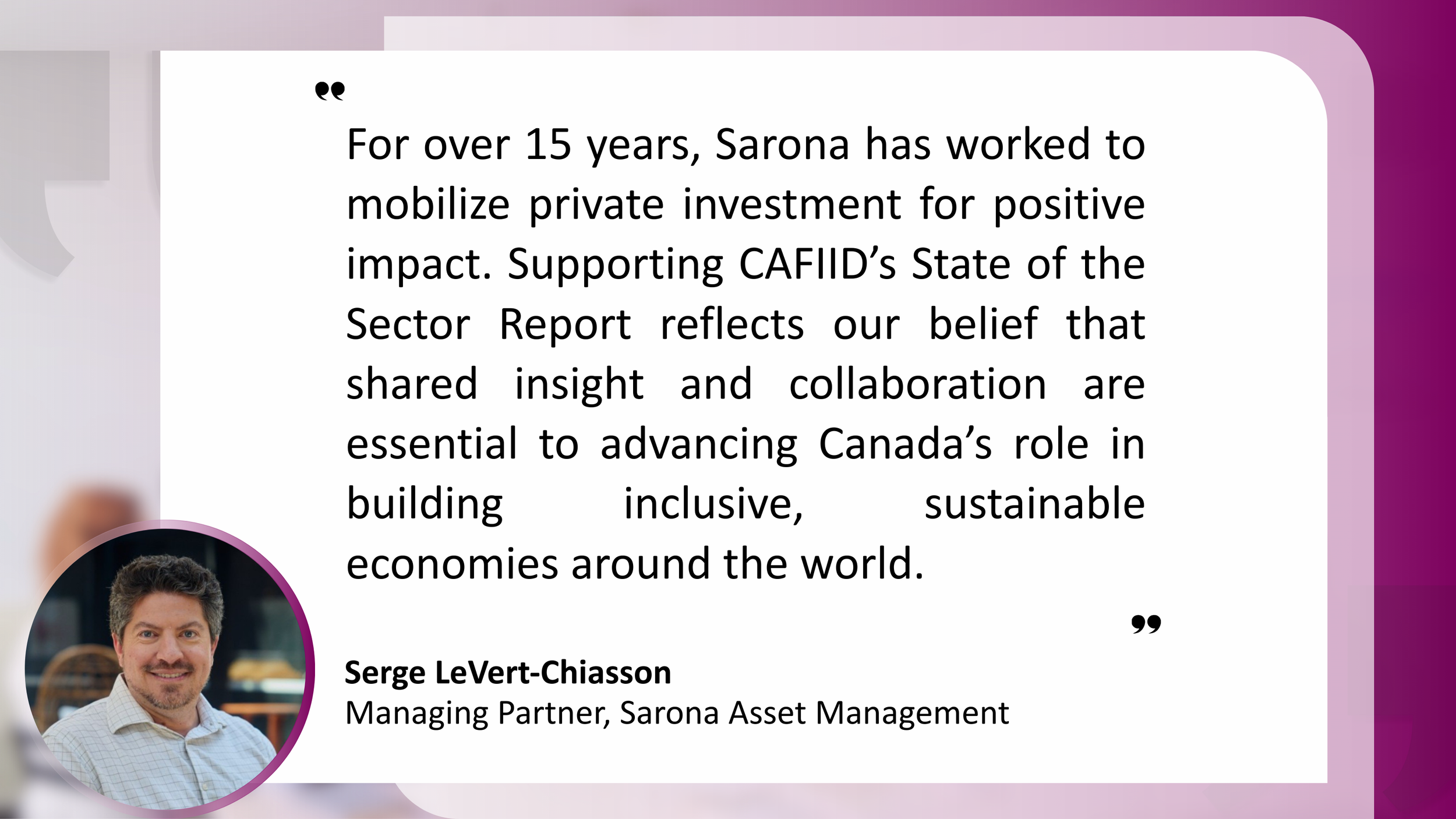
“For over 15 years, Sarona has worked to mobilize private investment for positive impact. Supporting CAFIID’s State of the Sector Report reflects our belief that shared insight and collaboration are essential to advancing Canada’s role in building inclusive, sustainable economies around the world. ”

-
CAFIID is Canada's leading member-driven network dedicated to mobilizing private capital for global sustainable development. Positioned at the nexus of policy, practice, and partnerships, CAFIID strengthens the ecosystem for sustainable investment in EMDEs.
Acting as a connector, convener, and field builder, CAFIID brings together investors, DFIs, philanthropies, and policymakers to address systemic barriers such as limited investable pipelines, regulatory misalignment, and inadequate risk-sharing mechanisms—helping unlock greater volumes of Canadian capital for the SDGs.
CAFIID's practitioner-led, volunteer-driven model ensures that members shape the organization’s programs and knowledge outputs, cultivating both technical expertise and a trusted community among impact investors.

-
The Canadian impact investing ecosystem spans a broad spectrum, from philanthropic and catalytic capital to market-rate ESG and institutional funds. This diversity is a source of strength, yet it also fuels ideological fragmentation that can make unified advocacy difficult.
Together with the Table for Impact Investment Practitioners (TIIP), CAFIID is co-leading the establishment of Canada’s National Partner to the Global Steering Group for Impact Investment (GSG). Research conducted by Price Waterhouse Coopers recommended establishing a Canadian National Partner be guided by three foundational principles: adopting a shared definition of impact investment that optimizes risk, return, and impact for people and planet; building a “big tent” network of networks that unites institutional investors, grassroots organizations, and intermediaries; and advancing standardized impact measurement and reporting to ensure Canada speaks with one coordinated voice in global markets.
Other partners working to coordinate efforts include the Responsible Investment Association (RIA), the Canadian Impact Investing Working Group (CIIWG), and Catalyst Community Finance.
This approach is grounded in the belief that no single entity can or should speak for the entire Canadian ecosystem. The strength of Canada’s impact sector lies in its diversity of perspectives, disciplines, and expertise.
-
CAFIID and its partners have worked closely with the GSG to strengthen Canada's contribution to the global impact investing movement. The GSG, an independent international organization catalyzing impact investment and entrepreneurship, grew out of the G8’s Social Impact Investment Taskforce and now unites 40 National Partners and country partners.
CAFIID's MoU with the United Nations Development Programme (UNDP) further deepens Canada's global impact investing network, aimed at accelerating the mobilization of private capital for sustainable development. This partnership enhances Canada's engagement with global sustainable finance initiatives, aligning with the UNDP's Sustainable Finance Hub's mission to direct investments toward the SDGs.
Through these complementary relationships, CAFIID positions Canadian impact investors to leverage global knowledge, foster collaboration, and advance Canada’s leadership in sustainable and inclusive finance
-
Achieving the United Nations Sustainable Development Goals (SDGs) requires a financial system that directs capital to the countries and communities that need it most. The United Nations Development Programme (UNDP) supports this effort in over 170 countries and territories by strengthening public institutions, shaping enabling investment environments and helping governments align financing with national development priorities.
Since 2022, UNDP-supported initiatives have helped align or mobilize more than $870 billion in public and private investment for the SDGs, with progress on track to reach $1 trillion.
As countries work to build stronger, more sustainable financial systems, partnerships with committed investors are essential. This is where Canada’s impact investment community plays an important role. The collaboration between UNDP and the Canada Forum for Impact Investment and Development (CAFIID) helps connect Canadian capital with global sustainable development efforts, creating opportunities for investment that deliver meaningful, long-term impact in emerging and developing economies.
A core element of the collaboration is the opportunity for CAFIID to engage with UNDP on the emerging ImpactWorks Alliance. Co-led by UNDP and the International Organization for Standardization (ISO), the ImpactWorks Alliance will introduce ISO–UNDP 53001, a global management system standard for sustainability and impact, in 2026. The standard will help governments, enterprises and investors integrate sustainability into core decision-making and create clearer pathways for long-term investment.
Through this partnership, Canadian investors gain access to country-led processes and tools that improve investment visibility, reduce risk and help build credible pipelines. UNDP works with governments to implement Integrated National Financing Frameworks (INFFs), SDG budgeting, taxonomies, investor maps and project pipeline development. These platforms help countries identify their financing priorities while giving investors a transparent and reliable basis for decision-making.
The collaboration is driven by a shared commitment to making finance work for people and the planet. It supports investments that advance clean energy, expand access to insurance and risk finance, strengthen small- and medium-sized enterprises, protect nature and biodiversity, and promote inclusive growth.
By combining UNDP’s global presence and policy expertise with CAFIID’s leadership in Canada’s impact investment landscape, the partnership helps direct capital toward opportunities that are aligned with country priorities, grounded in local needs and capable of delivering long-term sustainable development results.

Closing the SDG Financing Gap: A Canadian Call to Action
-
CAFIID's mission remains clear: to ensure that Canadian capital serves a global purpose through impact, inclusion, and innovation. The foundation has been laid: the next chapter is about scale, solidarity, and shaping a financial future where every investment counts for both profit and purpose.

To close the SDG financing gap and strengthen Canada’s global leadership, the 2025 report calls for coordinated action across five constituencies:
Government of Canada
Scale impact investing through FinDev Canada and GAC
Reform regulatory and fiscal policies (Income Tax Act, RRSP eligibility)
Establish an international impact-investment wholesaler
Encourage a greater focus on innovative finance amongst multilateral institutions
Institutional Investors
Recognize impact as part of fiduciary duty
Pilot EMDE allocations using blended structures
Invest in staff capacity and data analytics
Ecosystem Builders
Foster transparency, shared learning, and standardized metrics to reduce fragmentation.
CAFIID and Members
Continue advocacy, expand Communities of Practice and connect Canadian investors with GSG National Partners in EMDEs.
Individual Canadians
Demand impact products from banks, pension funds, and advisors, signalling that profit and purpose must go hand in hand.

ACKNOWLEDGEMENTS
Canada Forum for Impact Investment and Development (CAFIID) is a community of individuals, organizations, and investors who treat positive social and environmental impact and financial return as co-existing priorities. CAFIID members combine many years of collaboration and engagement with a track record of innovation in structuring impact investment products, delivering technical assistance, and promoting sustainable investment ecosystems in emerging markets and developing economies.
CAFIID Report Research Team
Susanne Courtney, Journalist: Editor & Co-Author
Aysha Dawood, CAFIID Director of Programs & Operations: Project Manager & Co-Author
Patrick Hergt, CAFIID Board Vice Chair: Co-Author
Lindsay Wallace, CAFIID Board Chair: Editor & Co-Author
Ladin Akkaymak, CAFIID Thought Leadership Committee: Co-Author - Artificial Intelligence
Carolyn Burns, CAFIID Director and Gender Lens Investing Community of Practice Steering Committee: Co-Author - Gender Lens Investing
Rob Friberg, CAFIID Member: Co-Author - Climate Finance and Impact Measurement and Management
Kazi Ishrat Jahan, CAFIID Director and Gender Lens Investing Community of Practice Steering Committee: Co-Author - Gender Lens Investing
Kiana Mirshahi, CAFIID Intern: Co-Author - Artificial Intelligence
Mariapaz Pajares, CAFIID Intern: Data and Research Coordinator
Report Sponsors
As a volunteer-led organization, this Report would not have been possible without the generous financial and in-kind support of the following organizations: